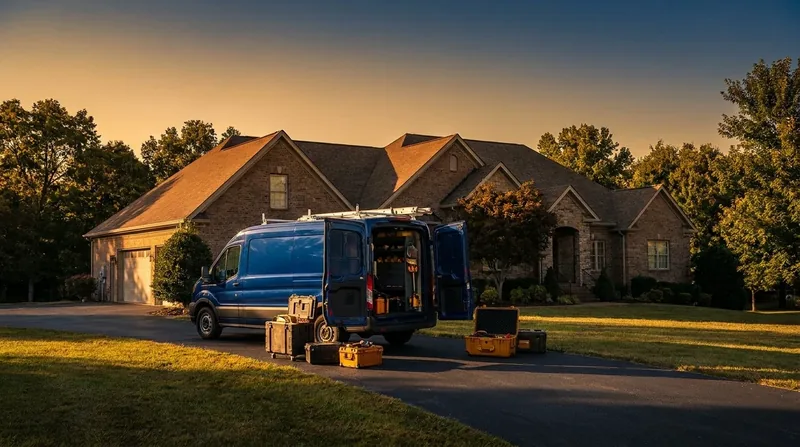
How to Start a Pest Control Business in Illinois: IDPH Structural Pest Control License
How to Start a Pest Control Business in Illinois: IDPH Structural Pest Control License
Introduction
Starting a pest control business in Illinois requires navigating state licensing, insurance, and regulatory requirements that are more specific than many people expect. If you want to operate a structural pest control service in Illinois, you'll need to comply with Illinois Department of Public Health (IDPH) regulations, maintain proper insurance coverage, and ensure your technicians hold the required certifications. This guide walks you through every step, from understanding the licensing landscape to running your first jobs.
Disclaimer: This content is informational only and is not legal or tax advice. Consult a licensed attorney and a certified public accountant (CPA) before formalizing your business structure or making tax decisions.
What You Need to Know Before You Start
The Two Types of Illinois Pest Control Licenses
Illinois distinguishes between two licensing regimes for pest control work. If your business focuses on structural pest control (termites, bed bugs, cockroaches, rodents, and other household pests), you fall under the Illinois Department of Public Health (IDPH). If you plan to apply pesticides to lawns, ornamental plants, or landscaping, you need a separate license from the Illinois Department of Agriculture (IDOA). Some pest control businesses hold both licenses to serve a wider market.
For this guide, we are focusing on the IDPH structural pest control license, which is the entry point most new pest control operators start with. The IDOA lawn and ornamental license involves additional training and testing and is a separate application process.
Key Regulatory Bodies
The Illinois Department of Public Health oversees structural pest control licensing and enforcement. They set standards for technician training, business operations, and record-keeping. You will interact with IDPH directly for your license application, renewal, and any compliance questions. The state business filing itself happens through the Illinois Secretary of State.
Materials and Setup You Will Need
Before applying for your IDPH license, gather these items and prepare your business foundation:
- Business formation documents: Articles of Organization (if you choose an LLC) or Articles of Incorporation (if you incorporate). File these with the Illinois Secretary of State at apps.ilsos.gov/llcarticles/index.jsp
- Federal Employer Identification Number (EIN): Apply free at irs.gov if your business will have employees
- Liability insurance documentation: A policy meeting IDPH minimums of $100,000 per person and $300,000 per occurrence, plus $50,000 property damage coverage
- Technician certifications: At least one certified technician on staff; they must have passed the IDPH structural pest control technician exam
- Business location: A physical address in Illinois where you will maintain records and dispatch operations
- Business registration with Illinois Department of Revenue: Free online registration at MyTax Illinois (Form REG-1) through tax.illinois.gov/businesses/registration.html
- Pesticide applicator credentials: Anyone applying pesticides in commercial structural pest control must be IDPH certified or work under the supervision of a certified technician
Step-by-Step Process to Start Your Pest Control Business in Illinois
Step 1: Form Your Business Entity (1 to 2 weeks)
Decide whether to operate as a sole proprietorship, partnership, LLC, or corporation. Most new pest control operators choose an LLC for liability protection and simplicity. An LLC provides limited liability if someone is injured during a treatment and protects your personal assets.
File your Articles of Organization with the Illinois Secretary of State online at apps.ilsos.gov/llcarticles/index.jsp. The filing fee is $150 for standard 10 business day processing or $250 for 24 hour expedited service. The Secretary of State will confirm your formation in writing.
Choose an Illinois-based registered agent (either an individual resident or a registered agent service) and designate a registered office address. This is a separate requirement from your business location but can be the same address. Every LLC must maintain a registered agent and office for official correspondence.
Step 2: Obtain Your EIN and Register with Revenue (Same day to 1 week)
Apply for a federal Employer Identification Number (EIN) from the IRS at no cost. You can apply online at irs.gov and receive your EIN immediately. This number identifies your business for tax and employment purposes.
Register your business with the Illinois Department of Revenue through MyTax Illinois (Form REG-1) at tax.illinois.gov/businesses/registration.html. This is free and typically processes within one to two business days online. If you have employees or will collect sales tax, this registration is essential. If you plan to resell pesticides or equipment, you will need to understand Illinois sales tax obligations (6.25 percent state rate, plus local taxes in many counties).
Step 3: Secure Liability Insurance (1 to 2 weeks)
IDPH requires pest control businesses to carry commercial general liability insurance. The minimum coverage is $100,000 per person / $300,000 per occurrence plus $50,000 property damage. Contact insurance brokers who specialize in pest control or contractor liability. They understand the coverage gaps specific to your work and can recommend endorsements.
Get written proof of insurance from your provider. You will need this certificate when you apply for your IDPH license. Keep the policy active and renew it before expiration; lapse in coverage can result in license suspension.
Step 4: Ensure At Least One Technician Is Certified (2 to 4 weeks)
Illinois requires you to have at least one certified technician on your staff before you can operate. If you are the owner and technician, you must be certified. Staff who are not certified may work under the supervision of a certified technician employed at your location.
Certification requires completing the training IDPH prescribes and passing the IDPH certified technician examination. The IDPH fee for the examination, including the original certificate, is $75, and certificates are valid for 3 years.
Step 5: Complete and Submit the IDPH Business License Application (3 to 4 weeks)
Download the IDPH commercial structural pest control business license application from the Illinois Department of Public Health website. The form requires:
- Your business name, address, phone, and EIN
- Owner and principal officer information
- Name and certification number of your designated certified technician
- Proof of insurance (copy of your liability certificate)
- Description of your service area and intended operations
- Declaration that you comply with all state and federal pesticide regulations
Submit the application with the original license fee of $250 and any required supporting documents. Send it to the IDPH office or submit electronically if the department accepts digital applications. Ask IDPH about current processing times. If your application is incomplete, they will request additional information, which extends the timeline.
Step 6: Receive Your License and Begin Operations (Upon Approval)
Once IDPH approves your application and receives the $250 license fee, they will issue your commercial structural pest control business license. Licenses expire on December 31 of the year issued (an original license issued after October 1 runs through December 31 of the following year), so the business license renews every year. Keep a copy on hand for inspections and customer inquiries.
You are now legally authorized to provide structural pest control services in Illinois. Begin scheduling jobs, hiring additional technicians (who must also be certified), and building your customer base.
Insurance and Compliance Requirements
Liability insurance is not optional. IDPH explicitly requires it, and most pest control jobs are impossible to perform without it. Your insurance protects you if a customer is injured, property is damaged, or pesticides cause harm.
In addition to liability insurance, consider workers compensation insurance if you employ technicians. Illinois requires most employers to carry workers comp for their employees, regardless of hours worked. The premium depends on payroll and risk classification; a pest control technician is a higher-risk class than an office worker.
Keep detailed records of all treatments performed, including the property address, date, time, pesticides used, application method, and customer signature. IDPH may request these records during compliance audits. Confirm the record retention period with IDPH.
Annual Renewal and Ongoing Compliance
Your IDPH business license expires on December 31 each year. To renew, submit the renewal application and the $150 renewal fee postmarked by December 1. Renewals postmarked from December 2 through December 31 owe a $75 late filing charge, and applications postmarked after December 31 cannot be renewed.
Your certified technician's certification also expires, every 3 years on December 31. Check when your technician's cert expires and plan for recertification or retraining. If your primary technician leaves the business, you must have another certified technician in place before taking new jobs or you risk operating without required certification.
Your liability insurance must not lapse. A single day without active coverage is a violation and grounds for license suspension. Set up automatic renewal reminders with your insurance broker.
Tips for Success and Common Mistakes to Avoid
Do Your Homework on the IDOA Lawn/Ornamental License
If you think your market will demand lawn and ornamental pest control services, plan for a second license from the Illinois Department of Agriculture. The timeline and requirements differ from the IDPH structural license. Many successful pest control operators eventually expand to both, but start with IDPH structural and add IDOA if customer demand warrants it.
Hire and Train Carefully
Your first hire should ideally be someone with pest control experience or strong technical aptitude who can complete certification quickly. A bad technician reflects directly on your license and reputation. Until a new hire is certified, they can only work under the supervision of a certified technician.
Never Let Insurance Lapse
A single day of missing coverage is a license violation. Set up automatic renewal with your broker and pay premiums on time. The cost of renewal is minimal compared to the cost of losing your license.
Keep Meticulous Records
Document every treatment, pesticide used, dosage, application method, and customer approval. IDPH conducts compliance audits, and regulators will check your records. Poor record-keeping is a common reason for fines or temporary license suspension.
Understand Your Target Market Limitations
The IDPH structural license covers household pests in residential and commercial buildings. It does not cover lawn, turf, or ornamental plant treatments. If a customer asks for lawn pest control, refer them to an IDOA-licensed operator or obtain that license yourself.
Budget for Compliance and Continuing Education
Plan for the $150 annual business license renewal, the $75 technician certification renewal every 3 years, insurance renewal, and any training IDPH requires. Check IDPH guidance for current requirements.
Expected Results and Realistic Timeline
The full process, from deciding to start your business to receiving your IDPH license, typically takes six to twelve weeks. Here's a realistic timeline:
- Weeks 1 to 2: Form your LLC and obtain your EIN
- Weeks 1 to 2: Register with Illinois Department of Revenue
- Weeks 1 to 2: Obtain liability insurance
- Weeks 2 to 8: Complete technician training and certification (if you are not already certified)
- Weeks 3 to 4: Prepare and submit IDPH license application
- Weeks 7 to 10: Receive IDPH approval and license
You can work on multiple steps in parallel. For example, you can register with the Department of Revenue while your technician completes training. The critical path is technician certification plus the IDPH application review time, which is why getting your technician certified early is important.
Resources and Next Steps
To move forward, start with these official resources:
- Illinois Secretary of State (Business Formation): apps.ilsos.gov/llcarticles/index.jsp
- Illinois Department of Revenue (Business Registration): tax.illinois.gov/businesses/registration.html
- Illinois Department of Public Health (Pest Control Licensing): Consult the IDPH website or your regional office for the current application form, approved training providers, and technician exam details
- Illinois SBDC (Small Business Support): sbdc.illinois.gov / Free business planning and consulting
- SBA Illinois District: sba.gov/district/illinois / Financing, mentoring, and training resources
Consult a CPA or tax professional about your business structure, tax registration, and ongoing compliance. A pest control business is regulated, so consulting a business attorney to review your insurance, service agreements, and customer contracts is also advisable.
Conclusion
Starting a pest control business in Illinois is achievable if you follow the regulatory path step-by-step. The IDPH structural pest control license is your entry point. It requires proper business formation, insurance, at least one certified technician, and timely application. Once licensed, you must stay on top of renewals and compliance. The initial licensing cost is modest ($250 for the original IDPH business license, plus $75 for each technician exam and insurance premiums), but the payoff is significant if you serve your market well. Focus on quality service, meticulous record-keeping, and never let your coverage lapse. Your reputation and your license are your most valuable assets in this business.
Keep exploring: related Illinois guides
- How to Start a Lawn Care Business in Illinois
- How to Start a Cleaning Business in Illinois
- How to Start a Landscaping Business in Illinois
- How to Start a Dry Cleaning or Laundromat Business in Illinois
- Illinois Contractor License
- How to Start an LLC in Illinois
- Illinois Business License
- How Much Does It Cost to Start a Business in Illinois
- All Illinois business types
- Every Illinois guide in one place