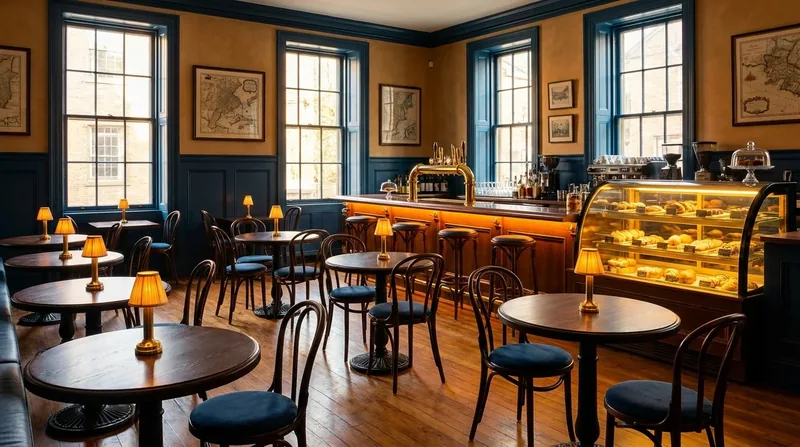
How to Open a Restaurant in Chicago: Retail Food License, CDPH Inspection and Taxes
How to Open a Restaurant in Chicago: Retail Food License, CDPH Inspection and Taxes
Opening a restaurant in Chicago requires navigating a specific set of state and local requirements. You must obtain a Retail Food Establishment license from the Department of Business Affairs and Consumer Protection (BACP) and pass a Chicago Department of Public Health (CDPH) inspection, verify your location complies with zoning rules, understand Chicago's restaurant tax structure, and meet Illinois labor standards. This guide walks you through each step so you know exactly what to file, what it costs, and what timelines to expect.
Before You Start: Know What You Are Not Doing
This article is informational. It is not legal or tax advice. Restaurant operations involve complex state and local rules, including health codes, labor law, lease negotiations, and business insurance. Consult a qualified attorney and a CPA before filing anything or signing a lease. A lawyer can review your specific location and business model; a CPA can model your tax position and payroll structure.
Step 1: Choose Your Location and Verify Zoning
Before you commit to a lease, confirm that your intended location allows a restaurant use. Chicago has zoning districts; some allow restaurants, some restrict them to specific types, and some prohibit food service altogether.
What to do:
- Visit the City of Chicago Department of Planning and Development (DPD) website and look up your address in the zoning map, or call DPD to confirm the zone allows your restaurant type. Zoning inquiries are free but clarifying edge cases may require a formal zoning review (fees apply).
- If your address is in a zone that restricts food service, ask your attorney whether you can obtain a variance or special permit. This is a separate process and adds time and cost.
- Once zoning is clear, negotiate a lease that includes standard landlord approval language for food-service operations and permits.
Common mistakes: Signing a lease without verifying zoning. Zoning violations cannot be fixed retroactively; you will be ordered to close.
Step 2: Register Your Business with the Illinois Secretary of State
You must choose a legal business structure (sole proprietorship, partnership, LLC, or corporation) and, for an LLC or corporation, register it with the Illinois Secretary of State before applying for a food license. BACP will ask for documents identifying your business entity during the licensing application.
If you are forming an LLC:
- File Articles of Organization (Form LLC-5.5) online at https://apps.ilsos.gov/llcarticles/index.jsp. The filing fee is $150 for 10 business day processing or $250 for 24 hour service. Illinois has no franchise tax on LLCs, so your only recurring Secretary of State charge is the $75 annual report (due each year before the first day of your anniversary month).
- Your LLC name must be unique, must include "Limited Liability Company," "LLC," or "L.L.C.," and cannot include "Corporation," "Inc.," "Ltd.," or "L.P." You can reserve a name for $25 for 90 days if you are still planning.
If you are forming a corporation:
- File Articles of Incorporation (Form BCA 2.10) online. The filing fee is $150 for standard processing. Illinois corporations pay a 7% corporate income tax plus a 2.5% personal property replacement tax (an effective 9.5% on net income). You also owe a franchise tax (0.1% of paid-in capital, $25 minimum before exemption, but filing periods beginning 1/1/2025 and after carry a $10,000 liability exemption, so most small restaurants owe $0). The annual report costs $75.
If you are operating as a sole proprietor or partnership:
- LLCs and corporations using a different name file an assumed name with the Illinois Secretary of State: Form LLC-1.20 (if you are an LLC) or Form BCA 4.15 (if you are a corporation) online. Sole proprietors and partnerships file with the Cook County Clerk and must publish notice in a local newspaper once a week for 3 consecutive weeks. The Cook County Clerk charges $50, and publication must start within 15 days.
Processing times: Illinois Secretary of State online filings process in 10 business days standard, or 24 hours for expedited service (add $100 for Articles of Organization).
Step 3: Apply for the Retail Food Establishment License
Once you have your business registered and your location is zoned correctly, you apply for the Retail Food Establishment license from BACP. This is not optional. Every food establishment in Chicago must hold this license and pass a CDPH health inspection before opening.
License type and cost:
- The license is called a "Retail Food Establishment License" and is issued by the Department of Business Affairs and Consumer Protection (BACP), with inspection by CDPH. It is valid for 2 years.
- The fee depends on your restaurant's size (square footage), not revenue. Fees are:
- Up to 1,000 square feet: $660
- 1,001 to 2,500 square feet: $940
- 2,501 to 4,500 square feet: $1,110
- 4,501 to 10,000 square feet: $1,320
- Over 10,000 square feet: $1,650
- This is a 2 year license, so divide by 24 months to understand the monthly cost to your budget.
How to apply:
- Apply online through the city's business license application system or in person at the BACP Small Business Center. The city's license page at https://www.chicago.gov/city/en/sites/chicago-business-licensing/home/restaurantscafesgrocerystoresandmarkets.html lists the current fees and steps, including zoning approval.
- You will need to provide: documents identifying your business entity, a current lease or proof of property ownership, your complete "doing business as" name, and a City of Chicago Food Service Manager Certificate (or proof of enrollment or reciprocity) if you will serve prepared food. CDPH's Food Protection Division requires additional documents.
- Some restaurants submit the application in advance of the tenant improvement phase so CDPH can review the kitchen design and approve it before you spend money on build-out. This is recommended because CDPH rejection of your design mid-build is expensive to fix.
- After CDPH receives your application, an inspector will be assigned and will contact you to schedule an inspection at your location. You must be present. The inspection checks for proper sink placement, refrigeration, food handling surfaces, pest control, and adherence to Illinois state and Chicago municipal food codes.
- If violations are found, CDPH will issue a report. Minor violations can often be corrected immediately; major violations may require a re-inspection after you make repairs. Once all violations are resolved, your license is issued.
Processing time: Timing depends on zoning approval, the City debt check and inspection scheduling, so ask BACP for current estimates. Plan for longer if major code compliance work is needed.
Step 4: Understand Chicago Restaurant Taxes and Illinois Labor Requirements
Once your restaurant is open, Chicago will tax your food sales and Illinois will impose labor standards on your workforce. These are non-negotiable and often misunderstood.
Chicago restaurant tax:
- Chicago imposes a 0.5% municipal restaurant tax on the sale of meals. Add this to the Illinois state sales tax (6.25%) to calculate your actual rate. In Chicago the combined rate is typically 11% for meals since August 1, 2026, or 12% inside the Metropolitan Pier and Exposition Authority (MPEA) zone, which adds a 1% food and beverage tax.
- You collect this tax from your customers and remit it to the City of Chicago and Illinois Department of Revenue. Mark your menu prices carefully so customers understand what tax will be added at the register.
- File sales tax returns monthly or quarterly depending on your sales volume (IDOR will inform you). Failure to remit tax is a serious violation and can result in penalties and liens on your business assets.
- Register with the Illinois Department of Revenue for sales tax at https://tax.illinois.gov/businesses/registration.html. Registration is free and processes in one to two business days online.
Illinois minimum wage and tipped wages:
- Effective July 1, 2026, the Chicago minimum wage is $17.05 per hour for employers with 4 or more employees (the Illinois state minimum is lower). Tipped employees must be paid $12.96 per hour in base wages, plus tips must bring them to at least $17.05 per hour.
- The City of Chicago passed a "One Fair Wage" ordinance phasing out the tip credit. On May 20, 2026, City Council paused the phase-out. Full elimination is now scheduled for 2030 for employers with 21 or more employees, and 2033 for smaller employers. Confirm the current schedule with BACP's Office of Labor Standards at https://www.chicago.gov/city/en/depts/bacp/supp_info/minimumwageinformation.html because this deadline may change again.
- Employees in Chicago accrue both paid leave and paid sick leave, one hour of each for every 35 hours worked, under the city ordinance in effect since July 1, 2024. Budget for this cost in your payroll model.
- Keep detailed payroll records including hours, wages, tips, and any deductions. Illinois wage law is strictly enforced and misclassification of employees or wage theft claims can result in lawsuits and Department of Labor investigations.
Step 5: Secure Sidewalk Cafe Permit and Entertainment Permits (if Applicable)
If you plan to serve customers on a sidewalk or patio, you must obtain a separate sidewalk cafe permit from the City of Chicago Department of Business Affairs and Consumer Protection. This is in addition to your food license.
Sidewalk cafe permit:
- File an application with the Department of Business Affairs and Consumer Protection. The city will review your space for safety, sidewalk width, ADA compliance, and neighbor impact. Approval is not guaranteed, especially in dense neighborhoods or near residential buildings.
- Typical conditions: your seating must not obstruct the public right-of-way, you cannot serve alcohol after a certain hour, and you may be required to remove tables during winter months.
- The permit is renewed annually and is subject to revocation if you violate the conditions.
Entertainment permit (if applicable):
- If you offer entertainment (live music, comedy, DJ services) and either charge admission or your venue holds 100 or more people, you need a Public Place of Amusement (PPA) license from Chicago. Confirm with BACP during your food license application process.
- PPA licenses require fingerprinting of owners of 25% or more and Department of Buildings and Fire Department inspections. The fee runs $770 to $13,200 for 2 years depending on occupancy.
Step 6: Prepare for Your CDPH Health Inspection
Your food license is conditional on passing a CDPH health inspection. The inspector will visit your location after you apply and will return for periodic inspections during your license term.
Before your inspection:
- Ensure your kitchen layout matches your approved floor plan. The inspector checks for:
- Handwashing sink with hot and cold running water and soap, separate from food prep sinks
- Food prep surfaces that are smooth, non-absorbent, and cleanable
- Refrigeration at 41 degrees Fahrenheit or below for raw animal products
- Proper labeling of all food items with date prepared
- No cross-contamination between raw and ready-to-eat foods
- Pest control measures (no open trash, sealed entry points)
- Staff training documentation showing employees understand safe food handling
- Develop a food safety plan documenting how you will store, label, cook, and serve food safely. Many restaurants hire a food safety consultant ($500 to $2,000) to help design this and train staff.
- Make sure food handlers complete accredited food handler training within 30 days of hire, as Illinois requires, and that at least one person on the premises at all times holds a City of Chicago Food Service Sanitation Certificate. Proof of completion must be on file.
After your inspection:
- If violations are noted, the inspector will provide a written report. Critical violations (e.g., temperature abuse, contamination) may result in an immediate closure order. Non-critical violations must be corrected within a specified timeframe, typically 24 hours to 30 days depending on severity.
- You can request a re-inspection after you correct violations. Re-inspection fees may apply; check with CDPH.
- Your inspection results are public record and posted on the CDPH website. Customers can look up your establishment and read prior inspection reports.
Timeline and Budget Overview
Here is a realistic timeline from decision to opening:
- Months 1 to 2: Secure location (lease negotiation), verify zoning with DPD, incorporate or form LLC with Secretary of State (2 weeks), and file DBA if needed.
- Months 2 to 4: Design kitchen and dining space, submit preliminary floor plans to CDPH for feedback, obtain landlord approval, and complete tenant improvements.
- Month 4 to 5: Submit food license application to BACP with final floor plans and occupancy proof. CDPH assigns an inspector and schedules initial inspection.
- Month 5: Inspection occurs. Correct any violations and request re-inspection if needed.
- Month 5 to 6: Once food license is issued, obtain sidewalk cafe and entertainment permits if needed, train staff, and conduct final menu and operations review.
- Month 6: Open to the public.
Budget summary:
- Secretary of State LLC or corporation filing: $150 to $250
- CDPH food license (2 years): $660 to $1,650 depending on square footage
- Assumed Name filing (if sole proprietor or partnership): $50 Cook County Clerk fee plus newspaper publication costs
- Zoning verification and DPD consultation: free to $500 depending on complexity
- Lawyer review of lease and incorporation: $1,500 to $5,000
- CPA setup and tax planning: $1,000 to $3,000
- Food safety consultant: $500 to $2,000
- Staff food handler training: varies by training provider
These are non-negotiable costs and should be included in your business plan budget before you sign a lease.
Common Mistakes to Avoid
- Not verifying zoning before signing a lease. Zoning violations result in closure orders and cannot be overridden. Check first, always.
- Underestimating the cost and timeline of a CDPH kitchen inspection. Major code violations discovered during build-out are expensive and time-consuming to fix. Submit preliminary plans to CDPH early.
- Failing to remit sales tax or misclassifying employees. Chicago and Illinois audit restaurants regularly. Sales tax and wage violations can result in penalties, liens, and lawsuits.
- Ignoring the sidewalk cafe permit requirement. Operating a patio without a permit can result in immediate closure and fines.
- Not training staff on food safety. Illinois and Chicago require documented food handler training for all kitchen employees. Failure to train can result in license suspension.
- Confusing state and local requirements. Illinois sets minimum wage and food code standards; Chicago adds local taxes, permits, and labor rules. Both apply to you simultaneously.
Where to Get Help
Official resources:
- Chicago Department of Business Affairs and Consumer Protection (BACP): https://www.chicago.gov/city/en/depts/bacp
- City of Chicago Department of Planning and Development zoning: https://www.chicago.gov/city/en/depts/dcd/supp_info/biz_info/zoning.html
- Illinois Secretary of State, Department of Business Services: https://www.ilsos.gov/departments/business-services.html
- Illinois Department of Revenue, sales tax registration: https://tax.illinois.gov/businesses/registration.html
- BACP Office of Labor Standards (minimum wage and paid leave): https://www.chicago.gov/city/en/depts/bacp/supp_info/minimumwageinformation.html
Professional advisors:
- A restaurant-experienced attorney can review your lease, business structure, and permits.
- A CPA familiar with restaurant tax compliance can set up your sales tax and payroll systems correctly from day one.
- A food safety consultant can design your kitchen workflow and staff training program to pass the CDPH inspection on the first try.
Final Note on Legal and Tax Advice
This article provides informational guidance on the steps and costs involved in opening a restaurant in Chicago. It is not legal, tax, or accounting advice. Restaurant law is complex and varies by business structure, lease terms, and operational choices (e.g., alcohol service, entertainment, outdoor seating). Do not rely on this article alone to make decisions about your business. Consult a qualified Illinois attorney and a CPA licensed in Illinois before filing anything, signing a lease, or making payroll decisions. The costs, timelines, and requirements described here are accurate as of the date of publication but may change; always verify current fees and rules with the relevant agencies before budgeting or planning.
Keep exploring: related Illinois guides
- How to Get a Liquor License in Illinois
- How to Open a Restaurant in Illinois
- How to Get a Liquor License in Chicago
- How to Start a Bakery Business in Illinois
- How to Start an LLC in Illinois
- Illinois Business License
- How Much Does It Cost to Start a Business in Illinois
- All Illinois business types
- Every Illinois guide in one place